Cavities (i.e., dental caries) are extremely common. On average, dentists report over 3 million cases per year. Cavities are caused by sugar from the foods we eat and bacteria in our mouth. Cavities can be prevented with good oral hygiene, a good diet and the help of consistent preventative dental visits.
Symptoms
Sometimes you won’t know you have a cavity until you visit a dentist; typically, when it hurts, it’s too late. When should you see a dentist? The correct answer is BEFORE you experience any of these symptoms.
Symptoms of a cavity include the following:
- Black, brown or white stains on the tooth surface
- Sensitivity to hot, cold, pressure (biting) or sweets
- Visible holes or cavities in the teeth
- Spontaneous aching
If you experience one or more of these symptoms, contact us right away so we can assess the extent of the damage. The earlier you address the problem, the less involved and costly the repair will be.
Stages of tooth decay
Tooth decay follows a distinct pattern that can be interrupted at any point along the continuum. The earlier you intervene, the better. The four stages of tooth decay are explained below.
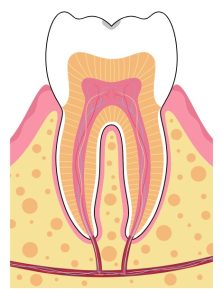
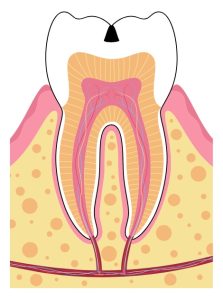
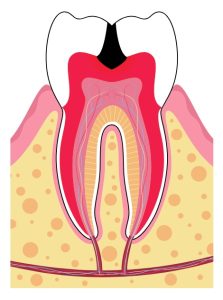
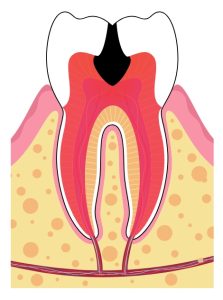
-
Enamel is the outer protective layer of the tooth and is a crystalline structure primarily made up of calcium and phosphate. It is the hardest substance in the body. However, continuous exposure to the acid from the sugar-eating bacteria in our mouths can cause this substance to break down. Typically, this process changes the color of the teeth to a chalky white color. Demineralization is a painless process and can be seen in the mouth or on an x-ray. It can be reversed using products such as fluoride and MI Paste®, which add calcium and phosphate back into the tooth.
-
Once the acid erodes through the outer shell of enamel and into the soft inner portion of the tooth (dentin), we have tooth decay. In the early stages, it is still painless. Decay is diagnosed when the dentist finds soft spots in the grooves of the teeth that stick, or they can be visible on an x-ray. The decay grows eight times faster once inside the tooth, so it is essential to treat cavities as quickly as possible. Once the decay approaches the nerve (or pulp), you may start to develop symptoms. Once you have symptoms, it is typically too late to do a filling.
-
Once the decay gets near the nerve, the nerve starts to become inflamed, and you develop a toothache. Sometimes this only happens after the removal of the decay. Once this occurs, the only option is to perform a root canal to save the tooth, which is much more involved and costly than a filling.
-
Typically, the nerve of a tooth will die. When this happens, necrotic tissue begins to build up inside the tooth. It then must go somewhere; normally, it pumps out of the end of the tooth. This process is called an abscess and can be extremely painful. Abscesses start small but can grow rapidly and cause significant health issues.
Causes
Sugar and bacteria are the two main ingredients that cause cavities. The following are also contributors:
-
Plaque is the slimy film that is left on your teeth after you eat. It takes about two days for plaque to harden to the point where you cannot remove it from your teeth with floss or a toothbrush. Once hardened, it becomes a nest for bacteria. If you add sugar to this mix, the result is acid.
-
Acid erosion is the breakdown of the tooth due to acid. The levels of acid in your mouth are highly correlated with the amount of sugar you eat or drink. Acidic drinks (like canned soda) with sugar are the worst combination for the teeth.
-
Deep grooves are common in molars. These are a perfect trap for sugar and bacteria because the bristles of a toothbrush cannot reach plaque deep in the grooves. Sealants are critical for protecting these hard-to-reach areas.
-
Anywhere food can get stuck, it will. These are the most common areas where cavities form. Small gaps between your back teeth and areas under dental bridges tend to collect food, inevitably leading to a higher number of cavities.
-
Wisdom teeth tend to have the highest rate of decay because they are hard to reach and clean.
-
Certain foods, due to their consistency, will stick to hard-to-reach places more readily. They are slower to dissolve with saliva and harder to remove with a toothbrush and floss. Examples include:
- Dried fruit
- Candy and mints
- Cereal, chips, cookies or cake
-
The more often we eat or drink sugar, especially at night when our mouth tends to be drier, the more acid is produced, and the more damage is done.
-
Although this may help a child fall asleep, it can cause dental decay very quickly. Caregivers should avoid giving babies of all ages sugar to help them avoid tooth decay.
-
Removal of all plaque and bacteria with brushing and flossing can prevent all cavities. However, most people do not even realize that they are missing areas. This is why you can get cavities in hard-to-reach areas even if you brush and floss daily. Learning where you might be missing plaque is one of the most important parts of a relationship with your dental hygienist.
-
Fluoride is a great tool to help slow down and prevent cavities. Flouride causes a chemical reaction that hardens the enamel and stops the acid attack. It is similar to vitamins for your teeth. There is a 70% reduction in the number of cavities with the use of fluoride. Flouride is added to municipal water sources, toothpaste and mouthwash. The most effective form of fluoride is a varnish and can be applied by your hygienist after a cleaning.
-
Age is a risk factor because younger people are less likely to clean their teeth effectively. It is important that parents or a dental hygienist teach children these skills at an early age. Elderly people tend to take more medications, which many times causes dry mouth. Less saliva available to wash away plaque increases cavities.
-
Dry mouth means less saliva to wash away the plaque that causes cavities. This can be caused by medication, radiation and other medical conditions. It tends to naturally occur at night, which is why proper brushing and flossing is even more important before bedtime.
-
Worn fillings with uneven margins create places for plaque to collect. If fillings are dark or stained, they could be developing a cavity.
-
Acid, in any form, destroys enamel. With acid reflux, the acid from your stomach enters the mouth from the esophagus and can contribute to the breakdown of enamel and form cavities.
-
Bulemia can cause significant damage to the teeth due to vomiting and the continual exposure of the teeth to stomach acids. This can also adversely affect saliva production that would normally help to wash away plaque from the teeth.

Complications
Cavities can cause serious complications for both children and adults. Complications include the following:
- Pain
- Swelling
- Abscess
- Pus
- Chewing problems
- Tooth loss
- Shifting of teeth
- Weight loss due to chewing difficulty
Although rare, there are some situations where an abscess can spread to other parts of the body like your brain or sinuses, or even cause a life-threatening airway obstruction.
Prevention
Tooth decay is entirely preventable if you follow these tips:
-
Brush with a fluoride toothpaste at least twice a day. Proper brushing and flossing are critical. A dental hygienist can tell you if you are doing it correctly. Although we recommend avoiding sugar, we realize that never eating sugar can be difficult. Make sure to brush and floss your teeth thoroughly after eating anything with sugar. We recommend electric toothbrushes like Sonicare® and interdental tools like a Waterpik® for the most efficient way to clean your teeth.
-
Mouth wash is something you can do quickly to dilute and remove some of the plaque after eating sugar. It is a good short-term solution when on the ago, but brushing and flossing are much more effective.
-
During your routine dental cleaning, a hygienist should show you the places in your mouth you are missing and how to get to those areas. The dentist will also diagnose if you already have cavities or have high-risk areas that need attention.
-
A sealant is a resin-based filler that is placed in the grooves of your molar teeth and keeps plaque from entering the depths of these grooves. It is similar to the caulk that connects the tile to your bathtub in that it prevents anything from getting in. This is especially important for children as soon as they get their six and twelve-year molars. Sealants are also recommended for adults to prevent cavities in the grooves of the molars. They are much less expensive than a filling and do not require any anesthesia.
-
After your cleaning or fillings, your dentist can add a fluoride varnish to your teeth. It is a thin coat of fluoride that has been proven to prevent cavities effectively.
-
Remember, avoid sugar, and you won’t get cavities. If you do decide to eat a sugary treat, make sure to brush and floss it away as quickly as possible.
-
Sugar-free drinks and foods are much better for your teeth. Avoid acidic foods that stick in your teeth. Sugar-free gum is an excellent option to increase saliva flow and wash away plaque when you are on the go.

Treatment
The treatment for a cavity depends on the extent of the damage.
- Early cavities that haven’t entered into the dentin can be reversed with fluoride and MI Paste®.
- Cavities that are in the superficial layers of the dentin (away from the nerve) can be repaired by removing the decay and filling the tooth.
- When over 70% of the visible tooth is damaged, a crown is typically needed.
- Once the decay reaches the deep dentin and is near the nerve, a root canal treatment will be required.
- Once decay has penetrated below the bone, the tooth typically needs to be extracted.
Frequently Asked Questions
-
A cavity is a hole in a tooth caused by tooth decay. It is formed when the plaque from food particles in your mouth combine with bacteria and sugar. The byproduct of this is acid. When the tooth comes into contact with this acid for an extended period of time, it breaks down the tooth’s enamel. When the acid enters the soft, inside part of the tooth (dentin), it is called caries or decay.
-
Cavities do not tend to be symptomatic in the early stages when a filling would solve the problem. As they progress, they can develop symptoms. Usually, at this point, the treatment involves a root canal or an extraction.
-
Some products like MI Paste® can remineralize teeth in the earlier stages of tooth decay. Once the decay has gone through the enamel and into the dentin, it cannot be reversed.
-
Parents may indeed pass on different types of oral bacteria to their children. However, tooth decay is still completely preventable.